
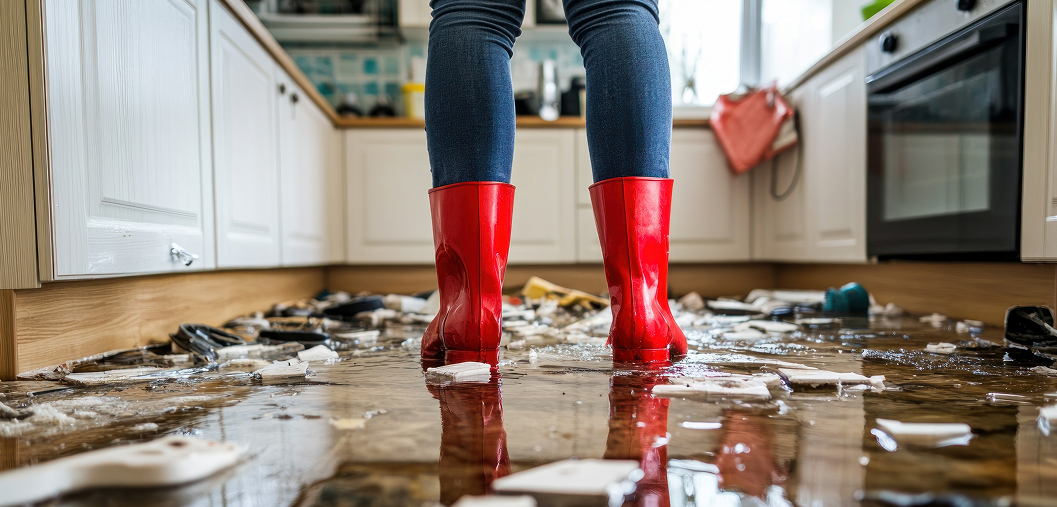
When fire or water tears through your home or business, your insurer moves quickly, with their adjuster, their process, and the result they'd prefer.
A public adjuster makes sure someone is standing in your corner just as fast.
Get a Free Claim Review
What’s Really Going On When You File a Claim Alone
The instant disaster hits your home or business, your insurer kicks off its own process, one engineered to close your claim efficiently and on their terms. That isn’t cynicism. It’s simply how the system is built.
Here’s how that process tends to unfold when you’re on your own:
- They send their adjuster, someone employed by or contracted to the insurance company to size up your damage.
- They build the estimate, using their documentation, their scope, and their preferred contractors.
- They put a settlement offer in front of you, which you might accept, contest, or have no way to evaluate.
- You wait, frequently for weeks or months, with no dedicated advocate driving your timeline.
- You take what’s offered, because you’re unsure what else to do and you need your life back.
The coverage you paid for is only worth as much as the claim you can actually prove. Without a specialist recording every loss, scoping every line of damage, and challenging whatever gets missed or underpaid, you may never see what you’re truly owed. No outcome is ever guaranteed, but going in without your own advocate is a documented handicap.

What a Public Adjuster Actually Does
A Public Adjuster Works for You, Not the Insurance Company
A public adjuster is a licensed professional who represents policyholders, both homeowners and business owners, throughout the insurance claims process. They stand independent from the insurer and carry a legal and ethical duty to act in your interest, not the carrier’s.
Look at it this way: bringing on a public adjuster is like retaining a lawyer to represent you in court. You’d never step into a legal proceeding with no representation while the other side fielded a seasoned team. The same reasoning holds here.
What They Do From Day One
The moment you bring on a public adjuster, the whole dynamic of your claim shifts. At Ohio Fire Claims, that means a full team steps in for you, not one stretched-thin generalist.
Here’s how the process plays out:
1. Immediate response: We run a site inspection and policy analysis as fast as possible after the loss.
2. Claim reporting: We alert your carrier and start documentation before anything is missed or disturbed.
3. Full damage documentation: A contents specialist inventories your belongings. A building estimator scopes all structural damage. Nothing gets estimated loosely or left off.
4. Claim preparation: We assemble the strongest possible presentation of your loss, in the format insurers expect, and walk through all of it with you before submission.
5. Negotiation: Our licensed public adjuster deals directly with the insurance company’s adjusters, meeting, disputing, and pushing back wherever it’s warranted.
6. Settlement: We keep in constant contact with you through every stage, working toward the fullest and fastest resolution available.
What They Don’t Do
A public adjuster does not promise a particular settlement figure; no ethical professional would. What they do promise is that your claim gets fully documented, accurately presented, and actively fought for by someone who answers to you alone.
Why Ohio Homeowners and Business Owners Trust This Process
Two Decades of Advocacy
Ohio Fire Claims represents policyholders as part of a firm whose work reaches back to 2003, taking on hundreds of claims a year and recovering more than $80 million in claims annually. That isn’t a volume mill. It’s what happens when a team documents thoroughly and advocates relentlessly on every single file.
A Team, Not a Clipboard
Every client is backed by a dedicated contents specialist, building estimator, and licensed public adjuster. The team model exists because one lone specialist can’t give a complicated claim the attention it demands. Ours can.
Licensed, Credentialed, and Accountable
Ohio Fire Claims adjusters are licensed in Ohio, affiliated with the National Association of Public Insurance Adjusters (NAPIA), and hold an A+ rating with the Better Business Bureau, accredited since 2025.
You Don’t Pay Until You’re Paid
Ohio Fire Claims works on a contingency basis. No upfront cost. No hidden fees. If we don’t perform, we don’t get compensated. That alignment isn’t merely a policy; it’s the reason this model works at all.
-

I hired this team after my fire and was so happy with the services of this company I made a couple of referrals. The referrals that I made became happy clients as well.
Gina Mead
-
In 2019, these guys literally changed our life. Had it not been for them advocating for us, we would have lost THOUSANDS of dollars of insurance money that was in our policy. Best decision I ever made for our family.
Otto Haentzler
-
Nik, Ross, & Matt
Words cannot express how much gratitude and appreciation I have for you and your staff. The length in which you all went to lift my burden and ease my stress was remarkable — you treated me like family!
Cheers and best wishes to you all!Kathy Niver
-
Matt, Ross, and Inventory Team:
Jerry and I wanted to thank all of you again for the assistance you gave us between the fire and our getting into our new home. Matt, you and Ross gave us reassurance and guidance working our way through this process. Kay, thanks to you for your extra time here trying to make sense of the cleaning inventory concerning what they did and did not do. We realize that you, Matt, made numerous visits to calm me down and give us support when we were overwhelmed with everything going on. We are very grateful. The job everyone did and the function and support of your company was priceless to us!
Thank you all!Jerry and Joyce Gillette
-
It has been five years now since I needed your service. I lost my home in March of 2010 to a house fire. I was getting the run around from my insurance company when I called and met with Nik the very next day. Thanks to him and the great team he has working for him I was able to buy a new home and recover what I had coming from the insurance company for my contents and home. If you should ever need references I would be happy to meet and speak with anyone.
Nancy Jeffrey
-
Thank you for all of your support during a very difficult time in my life. As you know, it was not an easy decision for me to make, however it ended up being a very good decision and one that helped me a great deal during a very emotionally difficult time. I am deeply appreciative of everything you and your fine staff did to help me and I will remember that for the rest of my life.
Thanks again for everything.Lori
-
Thank you for a job well done.
J Abate
Vice President, Comerica Bank
-
A tremendous weight was lifted off our shoulder knowing we had you preparing and presenting our loss to State Farm. We were able to continue our normal work schedules without all the added pressure. Thank You.
Mosby and Brenda Clark
-
Thank you for the work performed on our fire claim. We are happy with the settlement. We will continue to refer you to friends, relatives, and any one we meet with a fire loss.
John Vandoer
Questions People
Ask Before They
Call Us
Asking your insurer whether you need a public adjuster is like asking the rival team’s coach whether you ought to sign a better player. They’d say no. Naturally they would.
In most cases, the reverse is true. A fully documented, professionally prepared claim is easier for insurers to process and harder to stall without cause. Ohio Fire Claims brings a long track record of working efficiently with carriers, which tends to move claims ahead rather than back.
In most situations, it isn’t too late. Ohio Fire Claims can step in mid-process to review what’s been submitted, spot what may have been missed, and keep advocating from there. In Ohio, a Proof of Loss must be filed within 60 days of the loss; if that deadline is closing in, time genuinely matters.
Ohio Fire Claims works on a contingency basis. The fee comes out of the settlement, not out of your pocket in advance. You pay nothing until you collect from your insurance company.
Fire and smoke damage, flood and water damage, windstorm damage, mold and hidden structural damage, theft and vandalism, denied claims, and underpaid claims, for both residential and commercial properties throughout Ohio.
Two things, mainly. First, the team model: every client gets a contents specialist, building estimator, and licensed adjuster on their claim, not a single person buried under too many files. Second, the tenure: a practice built over two decades, 2,000+ clients served, and a reputation that carries weight in the rooms where claims actually get negotiated.